
Lower back pain that radiates into the hips or legs can significantly affect mobility, sleep, and quality of life. For many patients, a lumbar epidural steroid injection (LESI) offers meaningful, non-surgical relief when conservative treatments have not been enough. One of the most common questions patients ask is: How long does a lumbar epidural injection last and how to find the best lumbar epidural steroid injection clinic in Arkansas?
The answer depends on several factors, including the underlying condition, severity of inflammation, individual response, how the injection fits into a broader treatment plan and how pain . Understanding what to expect can help you make informed decisions about your care.
What Is a Lumbar Epidural Injection?
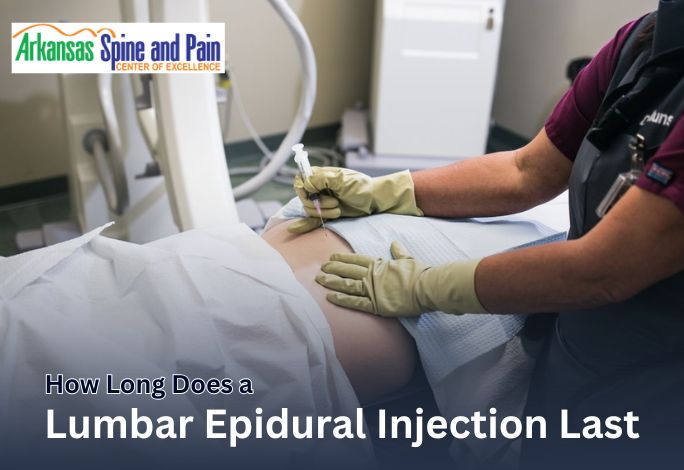
A lumbar epidural injection is a minimally invasive procedure in which anti-inflammatory medication is delivered into the epidural space of the lower spine. This area surrounds the spinal nerves that commonly become irritated by conditions such as disc herniation, spinal stenosis, or degenerative disc disease.
By reducing inflammation around these nerves, lumbar epidural injections aim to decrease pain, improve mobility, and allow patients to participate more comfortably in physical therapy and daily activities.
How Long Does Relief Typically Last?
The duration of pain relief from a lumbar epidural injection varies from patient to patient, but most individuals experience relief that lasts anywhere from several weeks to several months.
Typical Timeframes
- Short-term relief: Some patients experience improvement for 2–6 weeks
- Moderate relief: Many patients benefit for 2–3 months
- Longer-lasting relief: In some cases, relief may last 6 months or longer
It is important to note that lumbar epidural injections are not designed to permanently cure spinal conditions. Instead, they are used to control inflammation, reduce pain, and support long-term recovery strategies such as rehabilitation and posture correction.
When Does the Injection Start Working?
Pain relief does not always occur immediately.
- First 24–48 hours: Temporary numbness or mild relief may occur due to the local anesthetic
- 3–5 days: The steroid begins reducing inflammation
- 1–2 weeks: Maximum benefit is often reached
Some patients feel gradual improvement rather than sudden relief, which is completely normal.
Factors That Influence How Long Relief Lasts
Several factors determine how long a lumbar epidural injection will be effective:
1. Underlying Diagnosis
Conditions such as disc herniation or nerve inflammation often respond better than advanced spinal degeneration.
2. Severity of Inflammation
Mild to moderate inflammation typically responds more predictably than severe, chronic nerve compression.
3. Individual Healing Response
Each patient’s body responds differently to anti-inflammatory medication.
4. Activity Level and Rehabilitation
Patients who follow post-injection guidelines and participate in physical therapy often experience longer-lasting results.
5. Number of Injections
Some patients require a series of injections spaced weeks apart to achieve sustained improvement.
Can Lumbar Epidural Injections Be Repeated?
Yes. When beneficial, lumbar epidural injections may be repeated, but they are carefully spaced to protect spinal tissues.
- Most guidelines recommend no more than 3 injections per year in the same spinal region
- Repeat injections are considered only if previous injections provided meaningful relief
Your treatment plan should always be individualized based on response, imaging findings, and overall health.
What Conditions Respond Best to Lumbar Epidural Injections?
Lumbar epidural injections are commonly used to treat:
- Herniated or bulging discs
- Sciatica and nerve root irritation
- Lumbar spinal stenosis
- Degenerative disc disease
- Radicular leg pain
- Inflammation following spinal injury
They are especially helpful when pain radiates into the buttocks, thighs, or legs.
What If the Injection Does Not Provide Relief?
If pain relief is limited or short-lived, it does not mean treatment has failed. In such cases, your care team may:
- Adjust the injection approach or medication
- Recommend physical therapy or neuromuscular rehabilitation
- Explore alternative interventional procedures
- Evaluate for regenerative or nerve-based treatments
Lumbar epidural injections are often one component of a comprehensive pain-management strategy, not a standalone solution.
Why Choose Arkansas Spine and Pain Center?
At Arkansas Spine and Pain Center, patients receive care from a professional pain management team dedicated to treating the root cause of spinal pain—not just masking symptoms. Our Little Rock physician team combines advanced diagnostic expertise with evidence-based, non-surgical treatments to help patients achieve meaningful, long-term relief.
Patients choose Arkansas Spine and Pain Center because we offer:
- Advanced image-guided spinal procedures
- Comprehensive evaluations and personalized care plans
- Non-surgical solutions designed to restore mobility
- A patient-centered approach focused on safety and outcomes
- Coordinated care that supports rehabilitation and recovery
Our goal is to help patients return to daily life with greater comfort, confidence, and stability.
What to Expect After a Lumbar Epidural Injection
Most patients:
- Return home the same day
- Resume light activity within 24 hours
- Avoid strenuous activity for several days
- Gradually increase movement as comfort improves
Mild soreness at the injection site is common and usually resolves within a few days.
Frequently Asked Questions (FAQs)
1. How long does a lumbar epidural injection last on average?
Relief typically lasts from several weeks to a few months, depending on the condition and individual response.
2. Can one injection permanently fix my back pain?
No. The injection reduces inflammation but does not reverse structural spine issues.
3. How many lumbar epidural injections can I have per year?
Most patients are limited to about three injections per year in the same spinal region.
4. Does the injection hurt?
Most patients experience only mild pressure or brief discomfort during the procedure.
5. How soon can I return to normal activities?
Light activity can usually resume within 24 hours, with gradual return to full activity.
6. Are lumbar epidural injections safe?
Yes, when performed by experienced specialists using image guidance, complications are rare.
7. Will I need physical therapy after the injection?
Physical therapy is often recommended to improve strength, mobility, and long-term outcomes.
8. What if the injection does not work?
Other non-surgical treatments may be explored based on your diagnosis and response.
9. Can lumbar epidural injections help sciatica?
Yes. They are commonly used to reduce nerve inflammation associated with sciatica.
10. Is surgery avoided with these injections?
In many cases, injections help delay or avoid surgery, but results vary by condition