
Radiofrequency ablation (RFA) has become a widely used option for people struggling with chronic back pain who want longer-lasting relief without surgery. Many patients who are considering this treatment ask the same practical question: how long does radiofrequency ablation pain relief actually last? Understanding the typical duration of relief, why results vary, and what factors influence outcomes can help you decide whether RFA is the right step in your pain management journey when done by Arkansas Pain Specialists.
This blog breaks down what to expect from radiofrequency ablation, how long relief commonly lasts, and how it fits into long-term back pain care.
What Is Radiofrequency Ablation?
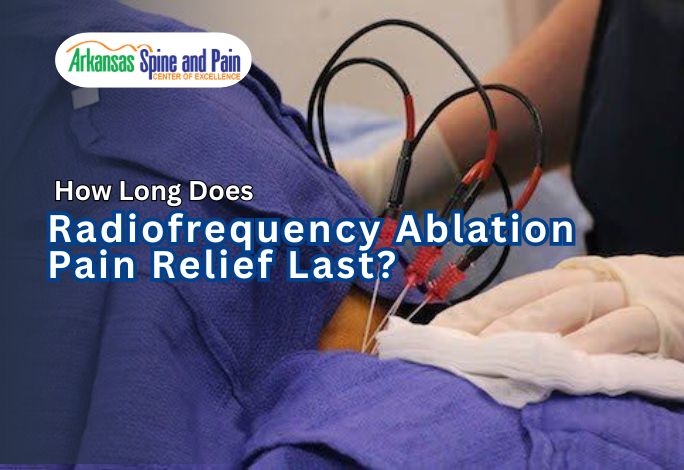
Radiofrequency ablation is a minimally invasive procedure designed to reduce pain by disrupting specific nerves that transmit pain signals from the spine to the brain. It is most often used for pain originating from the facet joints, which are small joints in the spine that can become painful due to arthritis, degeneration, or repetitive strain.
Before RFA is performed, doctors usually confirm the correct pain source with diagnostic nerve blocks. Once the responsible nerves are identified, radiofrequency energy is used to heat and interrupt those nerves, reducing their ability to send pain signals.
Typical Duration of Pain Relief After RFA
For most patients, pain relief from radiofrequency ablation lasts between 6 and 18 months. Some people experience relief for a shorter period, while others enjoy improvement for two years or longer. The wide range is normal and depends on several individual factors.
RFA does not permanently destroy nerves. Over time, the treated nerves can regenerate, which is why pain may gradually return. However, the regrowth process is slow, allowing many patients to benefit from extended relief compared to injections or medications.
Why RFA Relief Lasts Longer Than Injections
Unlike steroid injections that mainly reduce inflammation, RFA targets the nerve’s ability to transmit pain. This difference explains why RFA relief typically lasts much longer. By interrupting the pain pathway itself, the brain receives fewer pain signals from the affected area.
This extended relief gives patients an opportunity to stay active, strengthen muscles, improve posture, and reduce dependency on pain medications. These improvements can contribute to better long-term outcomes even after nerve function slowly returns.
When Does Pain Relief Begin?
Pain relief from radiofrequency ablation is not always immediate. Some patients notice improvement within the first week, while others experience gradual relief over two to three weeks. Mild soreness or stiffness at the treatment site is common initially and usually resolves on its own.
Once relief begins, many patients report a steady improvement in daily comfort, sleep quality, and mobility.
Factors That Influence How Long Relief Lasts
Several factors affect the duration of pain relief after RFA. One of the most important is accurate diagnosis. When the correct nerves are targeted, outcomes tend to be better and longer-lasting.
The underlying cause of pain also matters. Patients with facet joint–related pain often respond very well, while those with multiple pain sources may experience shorter relief. Activity level, overall spine health, and adherence to post-procedure recommendations also play a role.
Age and nerve regeneration speed vary from person to person, which explains why relief duration differs even among patients with similar conditions.
Can Radiofrequency Ablation Be Repeated?
Yes, radiofrequency ablation can be repeated if pain returns and the initial treatment was successful. Many patients undergo repeat RFA procedures and achieve similar or even longer relief the second time.
There is no fixed limit on how many times RFA can be performed, but each repeat procedure is carefully evaluated to ensure it remains appropriate and beneficial.
Is Longer Relief Always Better?
Longer pain relief is certainly desirable, but the quality of relief matters just as much as duration. Even moderate pain reduction can significantly improve daily function and reduce reliance on medications.
Some patients find that after a period of relief, their pain does not return as severely as before. This may be due to improved movement, strength, and reduced inflammation during the pain-free window.
How RFA Fits Into Long-Term Back Pain Management
Radiofrequency ablation is not meant to be a standalone cure. Instead, it works best as part of a comprehensive pain management strategy. During the months of reduced pain, patients are encouraged to stay active, follow physical therapy guidance, and maintain spine-friendly habits.
Using this window wisely can help extend benefits and improve overall spinal health, regardless of whether the procedure needs to be repeated in the future.
When RFA May Not Provide Long Relief
RFA may provide shorter relief if pain is not primarily coming from facet joints or if multiple pain generators are involved. Conditions such as severe disc herniation, spinal instability, or advanced nerve compression may require different treatment approaches.
This is why thorough evaluation and diagnostic testing are essential before proceeding with RFA.
Care at Arkansas Spine and Pain
At Arkansas Spine and Pain, radiofrequency ablation is offered as part of a personalized approach to chronic back pain. Careful diagnostic nerve testing is used to ensure the correct pain source is treated before proceeding. By focusing on precision, safety, and long-term outcomes, treatment plans are designed to help patients achieve lasting relief while avoiding unnecessary surgery whenever possible.
Frequently Asked Questions
1. How long does radiofrequency ablation pain relief usually last?
Most patients experience relief for 6 to 18 months, though some benefit longer.
2. Is RFA pain relief permanent?
No, nerves can regenerate, but relief often lasts much longer than injections.
3. How soon will I feel relief after RFA?
Relief may begin within days but often develops over one to three weeks.
4. Can RFA be repeated if pain returns?
Yes, repeat procedures are common and often effective.
5. Does RFA work for all types of back pain?
It works best for facet joint–related pain, not all spinal conditions.
6. Will pain return worse after nerves regenerate?
Most patients report similar or less intense pain if it returns.
7. Is RFA safer than back surgery?
Yes, it is less invasive and carries fewer risks than surgery.
8. Can physical therapy extend RFA results?
Yes, staying active and strengthening muscles can support longer relief.
9. Does age affect how long relief lasts?
Nerve regeneration varies by individual, so age can be a factor.
10. How do doctors know RFA will work for me?
Diagnostic nerve blocks help confirm whether RFA is likely to be effective.
Is it an effective procedure?
Radiofrequency ablation offers meaningful, long-lasting pain relief for many people with chronic back pain, even though it is not permanent. With relief commonly lasting several months to over a year, RFA can be a powerful non-surgical option that improves function, mobility, and quality of life. When combined with accurate diagnosis and a comprehensive care plan, it can play an important role in long-term pain management and recovery.