
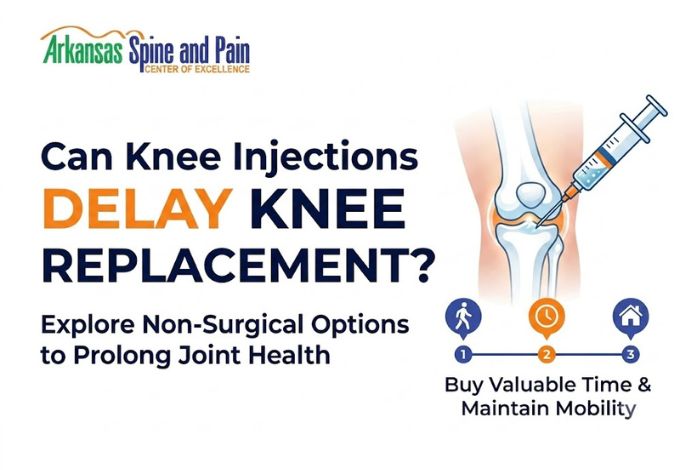
Deciding how to manage severe, degenerative knee pain is a major milestone for anyone living with advanced osteoarthritis. When simple daily tasks like walking down the driveway or browsing local shops become painful challenges, the conversation often turns toward major surgical interventions. Total knee replacement is a highly effective procedure, but it is also a major operation that requires extensive downtime, physical therapy, and financial resources. For many individuals, the immediate goal is to safely prolong the life of their natural joint and put off major surgery for as long as possible.
Non-surgical interventional treatments have become a cornerstone of modern sports medicine and joint care. By targeting pain and localized inflammation directly at the source, specific clinical therapies can buy patients valuable time, restoring physical function without the immediate need for an operating room.
The Role of Injections in Joint Preservation
Clinical joint preservation strategies focus on altering the environment inside the knee capsule to reduce friction, eliminate mechanical swelling, and improve overall mobility. While these therapies cannot regrow complex, completely missing articular cartilage, they are highly effective at breaking the destructive cycle of chronic inflammation.
Interrupting the Inflammatory Cycle
Chronic knee pain is rarely a static condition. When cartilage wears down, the mechanical grinding irritates the synovium the inner lining of the joint capsule. This irritation triggers an inflammatory cascade, creating localized heat, swelling, and chemical pain signals that cause you to alter your normal walking gait. A precisely delivered Joint Injection in Arkansas introduces powerful therapeutic agents directly into this compromised space. By rapidly cooling this internal inflammation, these targeted therapies relieve structural pressure, stabilize joint function, and allow individuals to resume the daily activities that keep their leg muscles strong.
The Critical Window for Postponing Major Surgery
Medical consensus shows that conservative, targeted therapies are most successful at delaying surgical intervention when they are introduced during mild-to-moderate stages of joint degeneration. For patients who still retain a partial layer of natural joint cushioning, advanced clinical management can successfully postpone a total joint replacement for several years. This strategic window allows individuals to remain fully active, maintain their workplace productivity, and wait until a time that is personally and logistically ideal for a major surgical recovery.
Comparing Therapeutic Options and Their Structural Impact
Different therapeutic formulations target different structural mechanisms within a degenerating joint space. Understanding how these distinct options function helps establish highly realistic timelines for long-term clinical care.
Corticosteroids vs. Viscosupplementation
Corticosteroid therapies act as rapid anti-inflammatory agents, offering fast relief that typically materializes within a few days. They are exceptionally useful for clearing out acute, fluid-filled swelling that completely limits movement. However, because frequent steroids can gradually weaken tissue structures over time, clinicians generally limit their use to three or four sessions per year.
For long-term joint lubrication, viscosupplementation using hyaluronic acid gel is often preferred. This biological gel mimics the body’s natural synovial fluid, providing mechanical shock absorption and physical coating over rough, arthritic bone surfaces. Unlike chemical steroids, hyaluronic acid does not degrade joint structures, making it an excellent option for regular, semi-annual maintenance programs designed to postpone surgical intervention.
The Synergy with Physical Rehabilitation
An injection should never be viewed as a standalone patch. Instead, it serves as a therapeutic window of opportunity. When the internal pain signals are quieted, patients can participate comfortably in targeted physical therapy. Strengthening the surrounding quadriceps, hamstrings, and hip stabilizers reduces the direct mechanical load placed on the knee joint itself, providing lasting stability that naturally protects the bone surfaces.
Developing a Comprehensive Care Plan in Central Arkansas
Every individual experiences joint wear differently based on their history, physical alignment, and daily demands. A successful long-term strategy requires an accurate structural diagnosis that moves beyond generic solutions.
For those navigating progressive mobility challenges near regional hubs like the Midtown Little Rock commercial corridor or traveling across the Interstate 430 interchange, accessing specialized care is essential. Building a structured roadmap for knee pain treatment in Arkansas allows you to leverage advanced digital imaging to assess your joint space accurately. This precise data ensures your care team can rule out complex ligament tears and verify whether your cartilage structure can safely benefit from conservative therapies.
Managing advanced joint wear requires balancing immediate lifestyle goals with long-term systemic health. Partnering with a dedicated specialist at Arkansas Spine And Pain ensures your treatment path remains firmly rooted in proven medical evidence, preventing premature surgical interventions while protecting your everyday independence. Consulting the Best knee pain doctor in Little Rock AR provides the deep clinical expertise needed to design a personalized treatment protocol that keeps you moving safely and comfortably.
Frequently Asked Questions
Can knee injections completely prevent the need for surgery?
In cases of mild-to-moderate arthritis, they can delay surgery for years or indefinitely if pain remains managed. For advanced bone-on-bone degradation, they act as a temporary measure to postpone, rather than completely prevent, joint replacement.
How many years can you delay a knee replacement using gel shots?
Many patients successfully postpone major joint surgery for two to five years by receiving regular, semi-annual hyaluronic acid gel treatments combined with targeted physical therapy to keep supporting muscles strong.
Do steroid shots make a future knee replacement surgery more difficult?
No, but timing matters. Clinical guidelines recommend avoiding any steroid injections within three months prior to a scheduled joint replacement surgery to minimize the risk of post-operative infection.
How quickly will I notice a reduction in pain after a gel injection?
Unlike rapid steroid treatments, hyaluronic acid gel works gradually. Most individuals begin to notice improved lubrication and decreased friction within three to five weeks after completing their therapy series.
Is walking encouraged immediately after a joint procedure?
Yes, ordinary light walking is safe and helps distribute the medication evenly within the capsule. However, heavy lifting, running, and prolonged standing should be avoided for the first forty-eight hours.
What are the main signs that injections are no longer working?
If pain relief lasts less than a few weeks, or if structural locking and severe bone grinding persist despite treatment, it generally indicates advanced degeneration that requires a surgical consultation.
Are these non-surgical joint treatments covered by Medicare?
Yes. Medicare and most major private health insurance providers cover standard steroid and hyaluronic acid treatments for diagnosed knee osteoarthritis, especially when documented conservative steps have been tried first.
Can regenerative therapies help delay advanced joint replacement?
Platelet-Rich Plasma treatments introduce natural growth factors that help calm the internal joint environment. While they cannot grow new cartilage, they provide valuable long-term anti-inflammatory support for many patients.
What should I do if my knee swells up slightly after the treatment?
Mild localized warmth or slight swelling can occasionally occur within the first twenty-four hours. Applying a cold compress for fifteen minutes at a time typically resolves this temporary reaction quickly.
Why is keeping my natural joint as long as possible beneficial?
Preserving your natural knee joint maintains your innate balance and spatial awareness. Delaying surgery also ensures that if you eventually need a replacement, the artificial implant lasts for the rest of your life.