
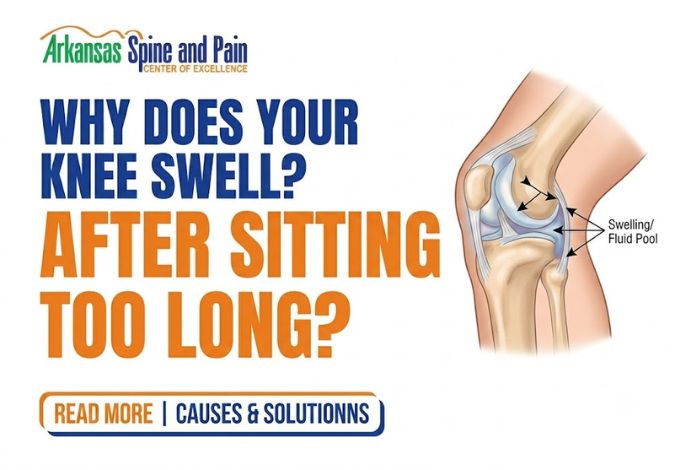
Sitting for extended periods during a long commute down Interstate 630 or while working at a desk in downtown Little Rock should feel restful. Instead, many individuals stand up only to experience a tight, heavy, or visibly swollen knee. This phenomenon, often referred to as “theater sign” or movie-goer’s knee, is a frequent complaint among patients seeking a definitive diagnosis for persistent joint stiffness.
When your lower extremities remain stationary for hours, subtle changes occur in fluid dynamics and mechanical pressure within the joint capsule. Understanding why immobility triggers swelling is the first step toward protecting your cartilage and finding lasting comfort.
The Biomechanics of Immobility and Fluid Accumulation
To understand why a joint swells during inactivity, it helps to look at how a healthy knee maintains its internal environment. Unlike other tissues that rely on a direct blood supply for nourishment, joint cartilage depends almost entirely on synovial fluid.
The Missing Pump Mechanism
Synovial fluid acts as both a lubricant and a nutrient delivery system for your knee. However, this fluid does not circulate on its own. It requires the physical bending, straightening, and weight-bearing movement of the leg to pump it through the joint space. When you sit still for hours, this mechanical pumping action stops. The fluid accumulates in the joint recesses rather than circulating evenly, resulting in localized fluid retention and a tight, swollen sensation when you finally stand up.
Prolonged Patellofemoral Pressure
Sitting with your knees bent at a ninety-degree angle stretches the tendons and presses the kneecap firmly against the thigh bone. This continuous mechanical compression restricts local microscopic blood flow and places steady stress on the underlying cartilage. If the joint is already dealing with minor wear and tear, this sustained pressure triggers an inflammatory response, prompting the body to produce excess fluid as a protective defense mechanism.
Underlying Conditions Triggered by Extended Sitting
While occasional stiffness can happen to anyone, structural swelling after sitting usually indicates an underlying joint issue that requires attention. Inactivity acts as a stress test that brings hidden inflammation to the surface.
Osteoarthritis and Cartilage Wearing
In a smooth, healthy joint, sitting causes minimal friction. However, for those dealing with progressive osteoarthritis, the protective cartilage has thinned. When you sit still, the lack of moving fluid allows the joint surfaces to rest directly against each other. The moment you stand and move, the unlubricated, rough surfaces irritate the synovial lining, leading to sudden swelling. For residents experiencing these daily limitations, seeking specialized knee pain treatment in Arkansas can help pinpoint the exact stage of joint wear.
Meniscus Tears and Chronic Bursitis
The meniscus acts as a rubbery shock absorber between your shinbone and thighbone. A minor or old tear can easily become aggravated by the constant, static bending of a long seat. Similarly, the fluid-filled sacs known as bursae can become inflamed when compressed for hours, filling with extra fluid that causes noticeable puffiness around the kneecap.
When to Transition from Self-Care to Clinical Evaluation
Managing minor stiffness often involves simple lifestyle adjustments. Taking regular walking breaks near local spots like War Memorial Park or using an ergonomic footrest can keep fluid moving naturally. However, if structural swelling becomes a regular occurrence, conservative tracking may no longer be enough.
When daily anti-inflammatory strategies no longer prevent fluid build-up, it is time to seek an expert opinion. Consulting with the Best knee pain doctor in Little Rock AR allows for an accurate physical assessment and targeted imaging to identify the root cause of your discomfort.
Rather than relying on temporary fixes, a specialist can design a plan that stops the cycle of chronic fluid accumulation. At Arkansas Spine And Pain, the clinical team focuses on non-surgical, interventional methods that restore normal joint mechanics and protect long-term mobility. For joints with severe, stubborn inflammation, a precise Joint Injection in Arkansas can calm the irritated tissue, allowing you to sit, walk, and travel comfortably without the fear of sudden swelling.
Frequently Asked Questions
Why does sitting down make my knee swell more than walking?
Walking pumps synovial fluid evenly through the joint, providing natural lubrication. Sitting stops this circulation, causing inflammatory fluids to pool in the joint spaces while constant bending increases internal pressure.
How can I stop my knees from swelling while working at a desk?
Set a timer to stand, stretch, or walk for two minutes every hour. Keeping your legs slightly extended rather than tightly bent under your chair also helps reduce continuous pressure on your kneecap.
Does a swollen knee mean I have arthritis?
Not always, but it is a frequent sign. Swelling can also point to a meniscus tear, bursitis, or tendon irritation. A comprehensive clinical examination is necessary to confirm the exact source.
Should I apply ice or heat when my knee swells after sitting?
Use ice for active swelling or puffiness. Ice constricts blood vessels and helps clear excess fluid build-up. Heat is better used later to relax tight muscles and ease general stiffness.
Can a long car ride cause permanent damage to a vulnerable knee?
A single long trip will not cause permanent structural damage, but frequent, unmanaged long distance driving can worsen existing cartilage issues due to steady joint pressure and lack of fluid movement.
When should I worry about joint swelling after sitting?
Seek medical attention if the swelling is accompanied by severe pain, redness, a fever, an inability to bear weight, or if the joint feels hot to the touch, as these signs can point to an infection.
Is fluid pooling in the lower leg related to knee swelling?
They can be connected. Poor circulation from sitting can cause fluid to pool in the lower legs, while internal knee swelling is typically confined within the capsule due to local joint inflammation.
How do doctors find out exactly why a joint is swelling?
Physicians use physical exams, digital X-rays, or high-resolution MRI scans to check cartilage health, see ligament structure, and find the exact source of your chronic fluid accumulation.
Will wearing a knee brace help prevent swelling while sitting?
Standard compression sleeves can help reduce fluid build-up, but tight structural braces may increase kneecap pressure while sitting. It is best to use braces under professional guidance.
Can targeted exercises prevent fluid retention during long periods of rest?
Yes. Simple movements like ankle pumps, straight leg raises, and seated leg extensions before and after sitting can help keep fluid moving and strengthen the supporting muscles.