
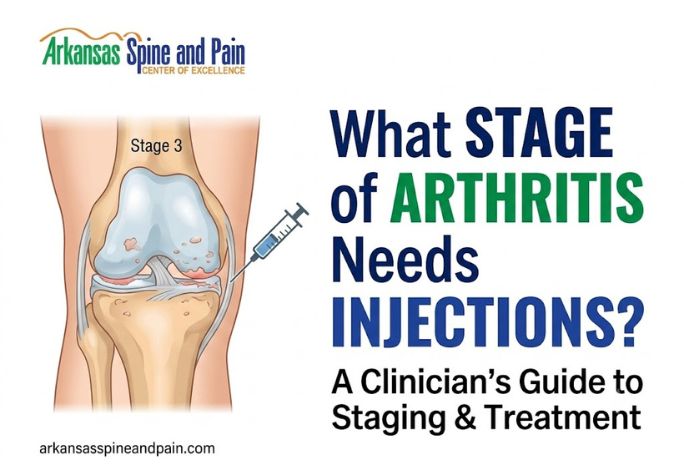
Determining the exact moment to transition from conservative pain management to targeted clinical interventions is a pivotal decision in long-term joint care. Osteoarthritis progresses through distinct structural phases, altering how bones, cartilage, and fluid interact inside the joint capsule. While initial stiffness might resolve with minor modifications, structural deterioration often requires direct therapeutic support to preserve your daily mobility.
Medical interventions are rarely based on a calendar; instead, they correspond directly to clinical staging and diagnostic imaging. Recognizing where your symptoms land on the radiographic scale allows you to introduce specialized therapies at the precise moment they offer the highest therapeutic value.
The Four Stages of Radiographic Joint Arthritis
Clinical practitioners utilize the Kellgren-Lawrence grading system to classify the severity of joint degeneration. This scale ranges from early, nearly imperceptible biological shifts to absolute structural degradation, dictating which interventional pathways will yield the most reliable relief.
Early Phases: Stage 1 and Stage 2
In the initial phase, known as Stage 1, the joint space remains largely intact, though minor bone spurs called osteophytes may begin forming. Patients typically feel occasional twinges of soreness after strenuous activity. By Stage 2, the arthritis is considered mild. X-rays reveal a distinct narrowing of the joint space, and the cartilage begins to lose its perfectly smooth texture.
At this juncture, first-line treatments like physical therapy, weight management, and oral anti-inflammatories are the primary recommendations. Interventional therapies are rarely introduced here unless an acute flare-up causes sudden, unmanageable swelling that restricts standard rehabilitation exercises.
Advanced Phases: Stage 3 and Stage 4
Stage 3 represents moderate arthritis, characterized by obvious gap reduction between the bones, extensive spur development, and early collagen fibers fraying significantly. This is the optimal window where targeted therapeutic options become essential tools to arrest progressive functional limitations.
When the joint deteriorates into Stage 4, the condition is severe. The protective cartilage cushioning has completely eroded, resulting in bone-on-bone friction, significant joint deformity, and constant physical limitation. While clinical shots can still be utilized in Stage 4 to manage agonizing pain flares, they function primarily as a temporary bridge to delay inevitable joint replacement surgery rather than a standalone long-term fix.
Mapping Injection Types to Specific Structural Stages
Different clinical therapies serve unique functions within a degenerating joint. Matching the specific properties of a medication to the biological environment of your current arthritic stage ensures optimal outcomes without over-treating the area.
The Role of Corticosteroids in Acute Flares
Corticosteroids are highly efficient anti-inflammatory agents rather than structural repairs. Their primary utility occurs during Stage 2 or Stage 3 when a sudden inflammatory spike fills the joint with excess fluid, creating intense throbbing. A targeted application breaks this cycle rapidly, allowing patients to resume therapeutic movement. Because repetitive steroid use can potentially compromise cartilage cells over time, they are used selectively rather than as a recurring monthly maintenance strategy.
Viscosupplementation and Biological Support for Moderate Wear
For patients experiencing the mechanical grinding of Stage 3 arthritis, hyaluronic acid treatments provide an elegant mechanical solution. These gel formulations mimic the natural lubricating fluid that has thinned due to chronic wear. By restoring this internal shock absorption, viscosupplementation reduces friction across the compromised joint surface. This localized approach is highly effective for moderate degradation because it addresses the mechanical reality of cartilage wear without harming the remaining tissue structure.
Navigating Specialized Care Pathways in Central Arkansas
When daily activities like walking around the River Market district or walking through residential neighborhoods in Hillcrest become consistently painful, seeking a comprehensive diagnosis is the next logical step. Relying on generic solutions can lead to delayed care, allowing mild structural issues to advance unnecessarily.
Securing an accurate diagnostic profile requires an advanced evaluation from specialized interventional physicians. At Arkansas Spine And Pain, clinical teams utilize high-resolution digital imaging to measure exact joint spacing and evaluate adjacent soft-tissue integrity. This precise measurement helps determine whether a patient requires a protective cushioning treatment or a deeper neurological intervention to disrupt chronic pain pathways.
A comprehensive examination guarantees that you avoid generic protocols and instead receive a strategy engineered for your specific skeletal alignment. Navigating specialized options for Arthritis treatment in Arkansas connects you with advanced medical platforms designed to target discomfort at its physical source.
For residents managing persistent immobility or stiffness near major regional corridors like University Avenue or the clinical hubs surrounding Interstate 430, finding an expert focused on joint preservation is paramount. Booking an assessment with the Best knee pain doctor in Little Rock AR provides direct access to clinical diagnostic testing, clarifying exactly when to introduce a specialized Joint Injection in Arkansas to maintain your active lifestyle safely.
Frequently Asked Questions
Can you get a joint injection for Stage 1 arthritis?
Generally no. Stage 1 arthritis involves minimal structural change. Medical guidelines prioritize low-impact exercise, physical therapy, and basic lifestyle adjustments over interventional procedures during this initial stage.
Why is Stage 3 considered the ideal window for gel treatments?
Stage 3 involves moderate cartilage loss with persistent mechanical friction. Hyaluronic acid gel shots work best here by restoring lost lubrication, buffering the joint, and reducing painful grinding before the space closes completely.
Can a steroid shot cure bone-on-bone Stage 4 arthritis?
No treatment can regrow completely missing cartilage. In Stage 4, an injection functions purely to suppress extreme inflammatory pain, improve daily function temporarily, and help patients delay major joint replacement surgeries.
How do doctors definitively determine my arthritis stage?
Physicians utilize standard weight-bearing X-rays to measure the exact millimetric gap between bones. In complex scenarios, an MRI may be ordered to evaluate soft tissues, meniscus health, and early subchondral bone changes.
Do advanced arthritis treatments require a surgical room?
Most therapeutic joint procedures are minimally invasive and performed right in a standard clinical room. The team uses specialized local numbing techniques to ensure the process is quick and causes minimal discomfort.
How long can I expect relief to last during Stage 3?
While individual biological responses vary, successful viscosupplementation or regenerative therapies during Stage 3 frequently provide improved joint mobility and relief lasting from six months up to a year.
Will insurance cover therapeutic treatments for early arthritis?
Most major medical insurance providers and Medicare approve coverage for standard joint injections if diagnostic imaging confirms at least Stage 2 or 3 arthritis and conservative measures have failed.
What happens if I choose to ignore Stage 3 symptoms?
Delaying treatment for moderate arthritis allows mechanical friction to continue unchecked. This accelerated wear can cause rapid cartilage loss, progressing the joint into severe bone-on-bone Stage 4 degradation.
Are there side effects to treating advanced stages with steroids?
While highly effective for temporary inflammation relief, repetitive steroid shots can accelerate cartilage breakdown if administered too frequently, which is why treatments are carefully spaced months apart.
Can physical therapy replace the need for targeted injections?
Physical therapy is essential for strengthening supporting muscles. However, if structural arthritis reaches Stage 3, mechanical grinding may limit your ability to exercise, making an injection necessary to restore basic movement first.