
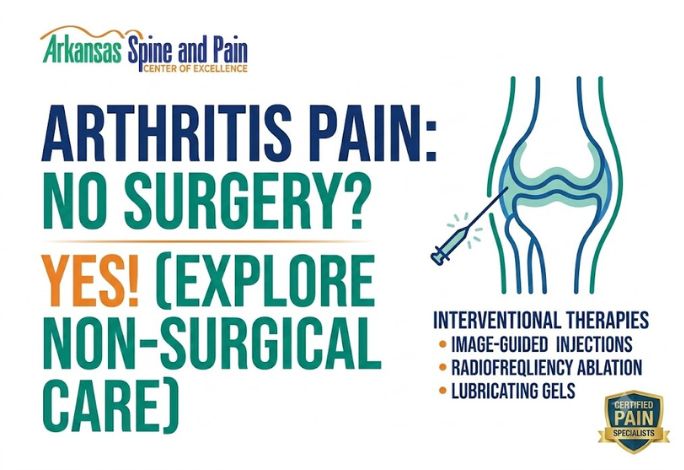
Living with persistent joint stiffness and swelling can make simple daily activities feel incredibly overwhelming. For many individuals across Central Arkansas, the immediate assumption is that severe joint wear eventually requires an invasive joint replacement. However, surgical intervention is rarely the only option, and it is almost never the first step.
Modern interventional medicine provides an extensive array of non-surgical therapies that successfully halt the cycle of chronic pain, improve daily range of motion, and preserve natural joint anatomy. By using targeted, image-guided procedures, patients can safely manage their symptoms without undergoing major operations or relying indefinitely on oral prescription medications.
The Non-Surgical Treatment Pathway for Joint Damage
An effective strategy for managing joint wear without going to the operating room focuses on breaking the cycle of chronic inflammation. When a joint is arthritic, the protective cartilage breaks down, leading to mechanical friction, swelling, and localized nerve irritation. Non-surgical care targets these specific issues precisely where they occur.
Advanced diagnostic tools, including high-resolution, on-site imaging, allow physicians to map out the exact points of stress within a compromised joint. Rather than a generalized approach, interventional therapies treat the specific joint capsule, nerve path, or tendon bundle responsible for your physical limitations. This structured, step-by-step care pathway ensures you only use the level of intervention your specific joint deterioration requires.
For individuals suffering from localized degradation in the lower extremities, specialized therapies can alter the course of the disease. Choosing an advanced knee pain treatment in Arkansas allows you to preserve your mobility using targeted clinical protocols rather than face a long surgical recovery window.
Advanced Interventional Therapies for Lasting Relief
When baseline conservative measures like physical therapy, lifestyle modifications, or over-the-counter anti-inflammatories no longer provide adequate comfort, advanced interventional options bridge the gap before surgery is ever considered.
Targeted Joint Injections
Using real-time X-ray guidance (fluoroscopy) or ultrasound, an interventional specialist can place medication directly into the inflamed joint space. A localized Joint Injection in Arkansas delivers a powerful anti-inflammatory dose precisely where the tissue is breaking down. This localized approach provides rapid relief while avoiding the systemic complications associated with long-term oral steroid use.
Viscosupplementation and Nerve Block Therapies
For mechanical grinding caused by mild-to-moderate osteoarthritis, hyaluronic acid injections act as a natural lubricant. This viscous gel mimics the body’s natural joint fluid, cushioning the bones and smoothing out everyday movements.
When structural friction is accompanied by sharp, radiating nerve pain, therapies like Radiofrequency Ablation (RFA) can be introduced. RFA uses controlled thermal energy to safely deactivate the specific sensory nerves transmitting pain signals from the joint to the brain, providing extended comfort without altering the physical joint structure.
Accessing Specialized Care Close to Home
Navigating chronic joint disease requires a dedicated partnership with a medical team that understands both the clinical complexities of pain and the value of a non-surgical lifestyle. Operating on an objective, referral-based system ensures that every patient at Arkansas Spine And Pain undergoes a meticulous primary evaluation before starting a specialized interventional plan.
Developing a comprehensive plan allows patients to maintain their active routines, whether they are taking family weekend trips near the River Market District or navigating the regular commute along the intensive medical corridor near West Markham Street.
If you are trying to balance the demands of a busy professional life with progressive joint discomfort, consulting with the Best knee pain doctor in Little Rock AR provides the precise diagnostic clarity and tailored interventional roadmap necessary to keep you moving comfortably without the need for surgical intervention.
Frequently Asked Questions
Can severe, bone-on-bone arthritis be treated without surgery?
Yes. Even when cartilage loss is significant, image-guided injections, specialized bracing, and nerve ablation therapies can significantly reduce pain levels and improve daily mechanical function without surgical reconstruction.
How do image-guided injections differ from standard shots?
Image-guided procedures utilize real-time fluoroscopy or ultrasound to verify the exact needle placement within the joint space, maximizing the clinical effectiveness of the medication while minimizing local discomfort.
What is the recovery time for a non-surgical joint procedure?
Most interventional joint procedures require minimal downtime. Patients typically rest the area for 24 to 48 hours before returning to their normal daily activities and low-impact exercise routines.
Are non-surgical arthritis procedures covered by major insurance?
Yes, most major commercial health insurance policies and Medicare provide coverage for standard therapeutic injections and nerve blocks, provided appropriate diagnostic documentation is established first.
How long can I expect the relief from a gel injection to last?
Hyaluronic acid gel treatments are designed to provide mechanical lubrication and shock absorption that typically lasts up to six months, and the series can be safely repeated if effective.
Will non-surgical treatments cure my underlying joint arthritis?
No treatment can restore lost cartilage completely, but non-surgical interventions manage symptoms, control chronic inflammation, and help you delay or avoid major joint replacement operations.
What happens if a steroid injection doesn’t relieve my pain?
If a steroid treatment fails to provide adequate relief, your care team can pivot to alternative strategies such as viscosupplementation, physical therapy coordination, or sensory nerve ablation.
Is radiofrequency ablation safe for managing arthritic joint pain?
Yes, radiofrequency ablation is a safe, clinically proven outpatient procedure that uses targeted thermal energy to interrupt pain signals from specific joint nerves for up to a year.
Who is a prime candidate for non-surgical arthritis care?
Individuals experiencing mild-to-severe joint stiffness who want to avoid the risks and lengthy rehabilitation timelines associated with major surgery are ideal candidates for these methods.
How do I get started with a specialized pain management clinic?
Because specialized interventional programs prioritize coordinated care, most operate on a by-referral basis through your primary care provider or treating specialist to ensure seamless clinical evaluation.