
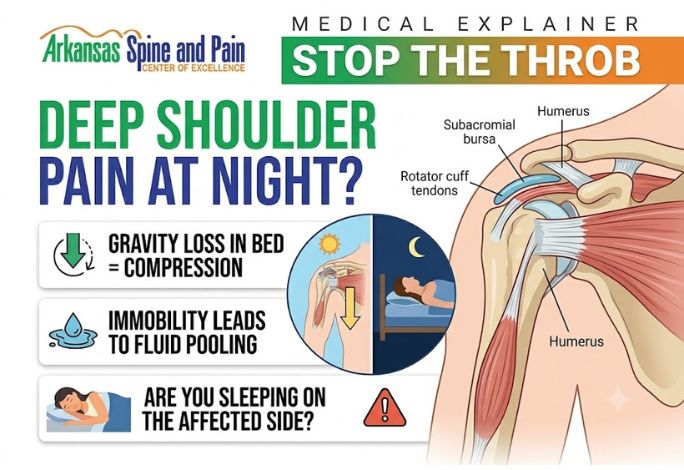
Lying down after a long day should bring physical rest, but for millions dealing with chronic joint inflammation, entering a horizontal position triggers an unbearable, deep ache inside the shoulder joint. This nocturnal throbbing can disrupt sleep architecture, leaving you exhausted and unable to find a comfortable position regardless of how many pillows you use to prop up your upper arm.
When deep joint pain routinely escalates at night, it is rarely a coincidence. Specific biomechanical shifts occur the moment you lie flat, turning mild daytime irritation into severe, localized distress.
The Biomechanics of Nocturnal Shoulder Pain
Understanding why joint discomfort intensifies in bed requires examining how gravity and positioning interact with the delicate soft tissues of your upper extremities.
The Loss of Gravitational Traction
Throughout the day, whether sitting or standing, gravity constantly pulls your arm bone (humerus) downward. This natural downward pull maintains space within the subacromial gap the narrow opening where your rotator cuff tendons and fluid-filled bursa sacs sit.
When you lie down flat, that downward traction disappears. Without gravity creating space, the humeral head migrates slightly upward into the socket, compressing already irritated tendons and creating a persistent, deep aching sensation.
Fluid Pooling and Inflammatory Pressure
During waking hours, continuous arm movement acts as a natural pump, helping circulate synovial fluid and keep tissue swelling under control. When your upper body remains motionless for hours during sleep, inflammatory fluids pool within the joint capsule. This pooling increases internal hydrostatic pressure, turning minor daytime stiffness into a deep, throbbing pressure.
The Most Common Anatomical Causes
While several conditions can produce nighttime shoulder symptoms, three primary clinical issues account for the vast majority of cases evaluated by interventional specialists.
1. Subacromial Bursitis
The bursa is a tiny, fluid-filled cushion that prevents friction between your bones and tendons. When repetitive overhead motion or micro-trauma causes this sac to become inflamed, bursitis develops. Because the bursa sits directly under the top bone of your shoulder, lying flat or sleeping directly on that arm puts intense, direct pressure on the swollen sac, triggering sharp, waking pain.
2. Rotator Cuff Tendinitis and Micro-Tears
The four tendons comprising the rotator cuff have a notoriously poor blood supply, particularly near their attachment points. When these tendons suffer micro-tears or chronic inflammation, the body’s attempt to repair them involves localized inflammatory signals. At night, when background sensory inputs decrease, your brain perceives these deep tissue repair signals as an excruciating, continuous ache.
3. Adhesive Capsulitis (Frozen Shoulder)
In its early stages (the “freezing” phase), adhesive capsulitis causes severe, unpredictable night pain. As the connective tissue capsule surrounding the glenohumeral joint thickens and tightens, any minor movement during sleep stretches these rigid, hyper-sensitive tissues, startling you awake.
Clinical Diagnosis and Non-Surgical Interventions
If night pain persists for more than two weeks, relying on over-the-counter sleep aids or temporary positioning wedges is rarely enough. Addressing the anatomical root of the pain is essential for long-term recovery.
Evaluating persistent Upper Body Pain requires a comprehensive diagnostic protocol, including high-resolution imaging to measure subacromial clearance and evaluate soft-tissue integrity. Identifying whether your night pain stems from fluid accumulation, tendon fraying, or capsular restriction allows specialists to construct an effective therapeutic roadmap.
When localized inflammation prevents restful sleep and limits daytime rehabilitation exercises, interventional treatments can break the pain cycle:
- Anti-Inflammatory Modalities: Targeted therapies reduce swelling within the subacromial space, restoring natural clearance so the joint does not compress when lying flat.
- Targeted Injections: Utilizing precise guidance, specialists can administer Peripheral Joint Injections directly into the inflamed bursa or tendon sheath, delivering localized relief that reduces nocturnal pressure.
- Deep Capsule Solutions: For severe cases involving the main joint capsule, an Intracapsular (Glenoid) Injection can calm the deeper cartilage environment and soothe severe capsular tightness.
Finding Regional Relief in Central Arkansas
Losing sleep to chronic joint pain impacts every aspect of your life, from your daytime productivity to your emotional well-being. If you find yourself constantly shifting positions or waking up every time you roll over while trying to rest at your home near the Heights or after working along the busy corridors near Shackleford Road, seeking expert clinical direction can protect your long-term joint health.
At Arkansas Spine And Pain, our medical team provides person-centered care designed to diagnose and treat complex joint issues without relying on major surgery. Consulting an experienced Doctor of Joint Pain in Arkansas offers a clear path toward understanding your symptoms, relieving nighttime pressure, and returning to deep, uninterrupted sleep.
Frequently Asked Questions
Why does my shoulder hurt at night even if it doesn’t hurt much during the day?
During the day, movement keeps joint fluid circulating and gravity holds the joint open. At night, lack of motion causes fluid to pool, and lying flat removes gravity’s downward pull, causing tissues to compress and hurt more intense.
What is the best sleeping position for shoulder pain?
The most supportive position is sleeping on your back with a pillow tucked under the elbow and forearm of your painful arm. This keeps the joint slightly elevated and prevents the humeral head from dropping back and compressing the joint space.
Can sleeping on my good side still cause pain in my bad shoulder?
Yes. If you sleep on your uninjured side, your painful arm can flop forward across your body. This hanging position pulls and stretches the tendons across the front of the joint, leading to a deep, nagging ache.
How do I know if my night pain is a torn rotator cuff?
Persistent night pain especially an inability to sleep on the affected side combined with noticeable weakness when lifting your arm horizontally is a classic sign of a rotator cuff tendon tear that warrants an MRI evaluation.
Can neck problems cause deep shoulder pain at night?
Yes. A compressed nerve in your cervical spine (cervical radiculopathy) can radiate deep, burning pain down into the shoulder blade and upper arm. This pain often changes intensity when you adjust your pillow or head position.
How long does bursitis night pain typically last?
Without treatment, subacromial bursitis can cause night pain for several months and may lead to joint stiffness. With targeted anti-inflammatory care and physical therapy, night symptoms usually improve within a few weeks.
Will ice or heat help more before going to sleep?
Applying an ice pack for 15 to 20 minutes right before bed is usually best for acute, inflammatory night pain because cold dulls nerve endings and reduces fluid pooling. Heat is better suited for morning stiffness.
Can a single joint injection stop my night pain?
Many patients report significant reduction in night pain within days of receiving an image-guided anti-inflammatory procedure, as calming localized swelling eliminates the pressure triggered by lying flat.
Should I wear a sling to bed to keep my shoulder still?
You should generally avoid wearing a rigid sling to sleep unless specifically instructed by your physician after an acute injury or surgery. Immobilizing the arm overnight can increase joint stiffness and promote frozen shoulder.
When should I see a doctor about nocturnal shoulder aching?
You should schedule an evaluation if night pain wakes you up multiple times a week, lasts longer than two weeks, is accompanied by arm weakness, or does not improve with basic positioning adjustments